Music is made up of the sounds of a wide variety of instruments. So that the musician knows which pitches to produce, there are musical notes. These simple symbols convey not only the respective pitch to the player, but also the manner in which a note is to be played.
Notes are written on a five-line staff, placed either directly on the lines or in the spaces. However, since there are also notes that extend above or below this range, ledger lines are used; these are added as short lines above or below the main staff.
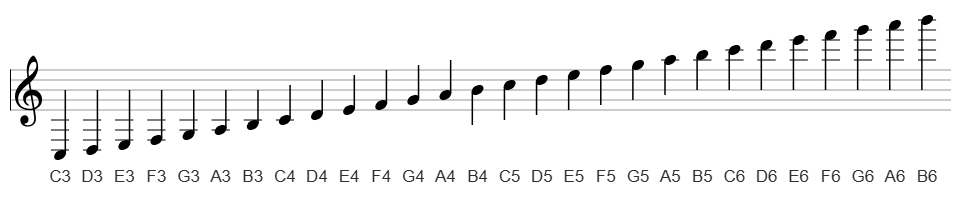
The musical staff with its 5 lines and ledger lines. Music notation with 28 notes. Clef: treble clef. Time signature: none. Notes used: C in octave 3 (quarter note), D in octave 3 (quarter note), E in octave 3 (quarter note), F in octave 3 (quarter note), G in octave 3 (quarter note), A in octave 3 (quarter note), B in octave 3 (quarter note), C in octave 4 (quarter note), D in octave 4 (quarter note), E in octave 4 (quarter note), F in octave 4 (quarter note), G in octave 4 (quarter note), A in octave 4 (quarter note), B in octave 4 (quarter note), C in octave 5 (quarter note), D in octave 5 (quarter note), E in octave 5 (quarter note), F in octave 5 (quarter note), G in octave 5 (quarter note), A in octave 5 (quarter note), B in octave 5 (quarter note), C in octave 6 (quarter note), D in octave 6 (quarter note), E in octave 6 (quarter note), F in octave 6 (quarter note), G in octave 6 (quarter note), A in octave 6 (quarter note), B in octave 6 (quarter note).
Free Online Exercises
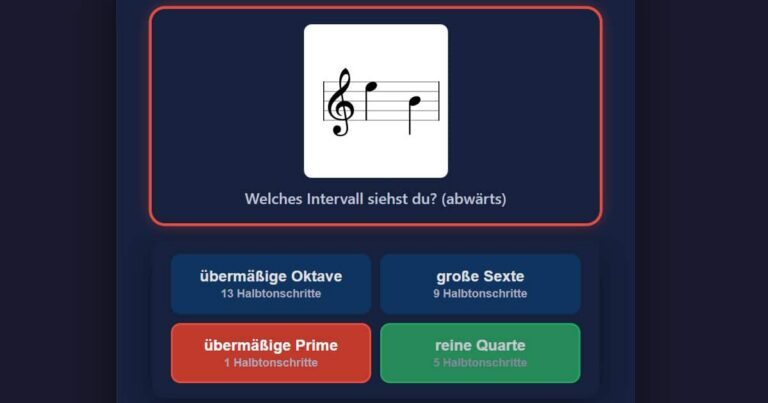
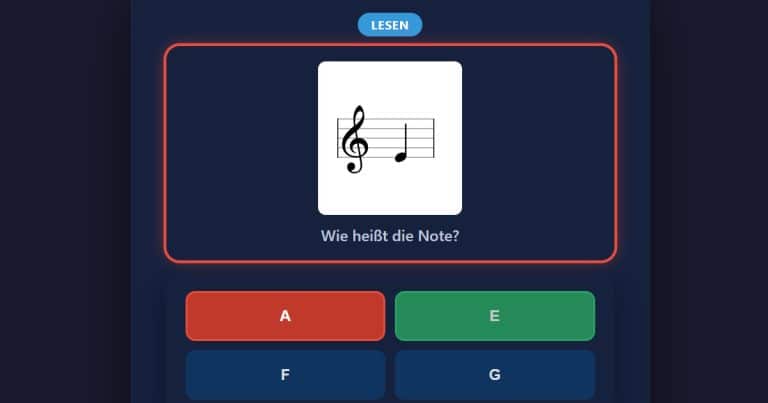
Interactive carousel with 5 music theory exercises. Use the arrow keys or swipe to move between the exercises.
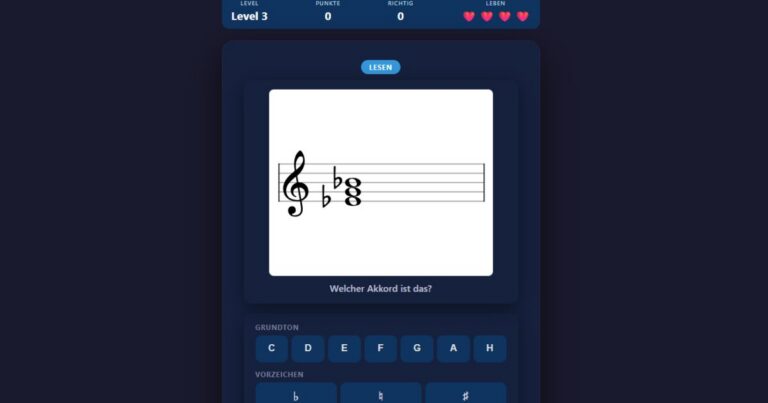
Reading Chords and Triads
Identify chords and triads in sheet music and strengthen your understanding of harmony.