At the beginning of every staff there is always a clef. The two most important are…
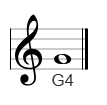
…the treble clef (or G clef):
…the bass clef (or F clef):
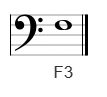
A clef always indicates where a specific note is located on the staff. The treble clef shows us that the note “G” lies on the second line from the bottom. The bass clef indicates that the note “F” lies on the second line (from the top).
Notes are always divided into ranges, so-called octaves. The names of the notes repeat over and over; they simply sound higher or lower. You might already know this from a piano: the keys repeat here over and over as well.
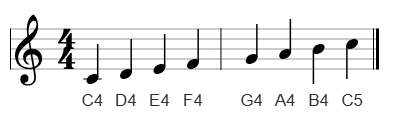
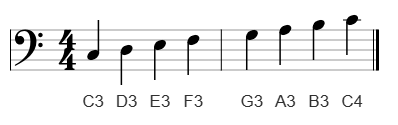
With the treble clef, the indicated “G” is G4 (the G above middle C), while the bass clef indicates F3 (the F below middle C), which is one octave lower (see also: Pitches and Note Names). This also accounts for the names “bass” and “treble”: “low” and “high”.
The most commonly used clef is the treble clef, as most instruments can play in its pitch range.
The bass clef is used for low-pitched instruments to avoid the many ledger lines in the treble clef that would otherwise be needed to represent the low notes, which would make the music difficult to read.
The treble clef with the C major scale (starting on middle C / C4):
The bass clef with the C major scale (one octave lower, starting on C3):
Mnemonic device
Have you been at home in treble clef for a long time, and suddenly your conductor presents you with a piece containing passages in bass clef? Don’t panic, there is a simple method to quickly identify the notes: Imagine middle C in treble clef and mentally place a bass staff to the left of it. Now write this out from right to left, starting at the top with a ledger line, just like you would at the bottom in treble clef. Middle C sits on the first ledger line above in bass clef and on the first ledger line below in treble clef. Thus, the bass clef simply extends the staff downward. Instead of writing many ledger lines, you simply switch clefs.

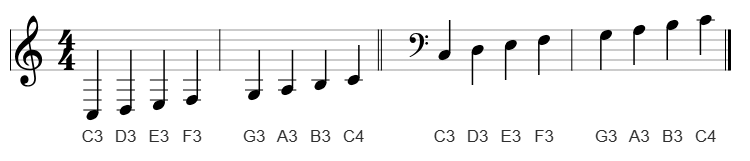
With this, you have created an easy-to-remember connection: middle C (C4) on the first ledger line above the bass clef is the same note as the middle C (C4) on the first ledger line below the treble clef. The bass clef thus simply extends the staff downward. If you play a bass instrument, you look at the whole thing in reverse and can orient yourself from left to right by mentally placing the treble clef to the right above your bass staff.
Free Online Exercises
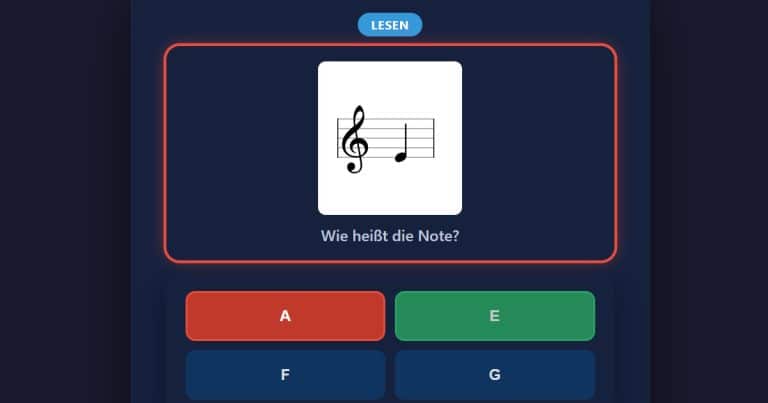
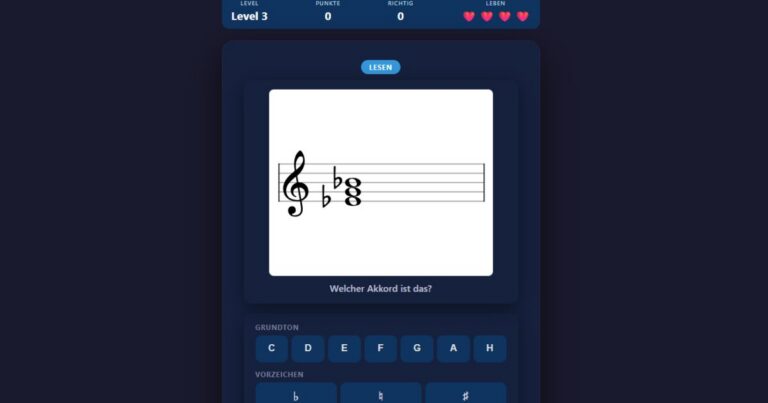
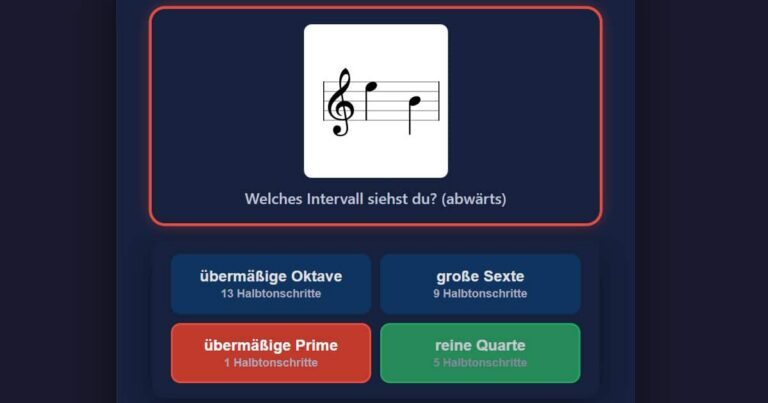
Interactive carousel with 5 music theory exercises. Use the arrow keys or swipe to move between the exercises.
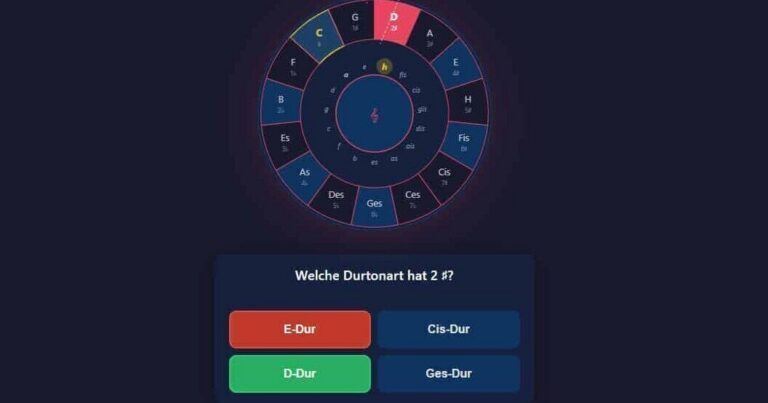
Circle of Fifths Trainer
Practice the circle of fifths and master the relationship between musical keys and key signatures.