To be able to play truly expressive pieces of music on your instrument – whether piano, guitar, or another instrument – you need to know exactly which note to play when, at what position, and for how long.
Of course, you can also improvise completely freely to your heart’s content or play intuitively, which is a wonderful complement. But at the very latest, when you work with others in an orchestra, a band, or an ensemble, it is essential to master the universal language of music and be able to play confidently from sheet music.
What to expect in this chapter
In the following chapters, you will learn step by step:
- What a grade actually is.
- How to enter them formally correctly into the staff.
- How notation specifies both the exact pitch and the temporal duration of a note.
To put your theoretical knowledge directly into practice, you will also find practical online exercises that reinforce your understanding in a playful way. I wish you great success, perseverance, and above all, a lot of fun learning!
Advanced tip: Once you’ve read through all the chapters carefully, you’ll be able to read and interpret sheet music on your own. Maybe you’re already familiar with some of the basics? Then simply skip the familiar sections and focus directly on the areas that are still new and exciting for you!
Free Online Exercises
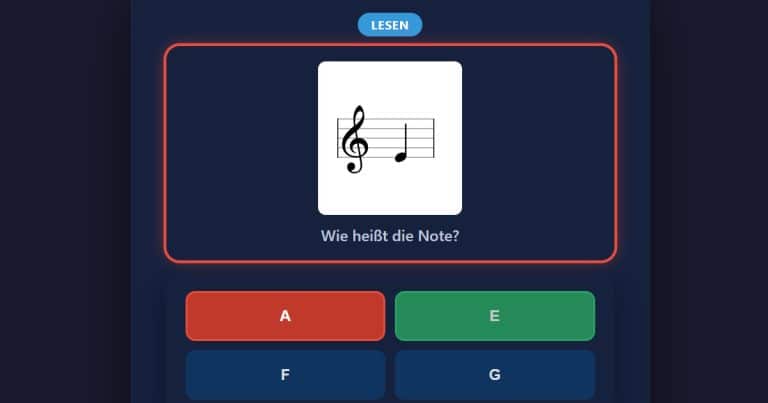
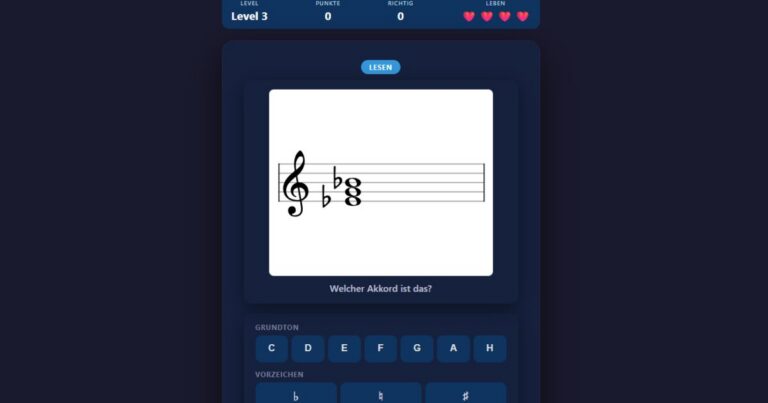
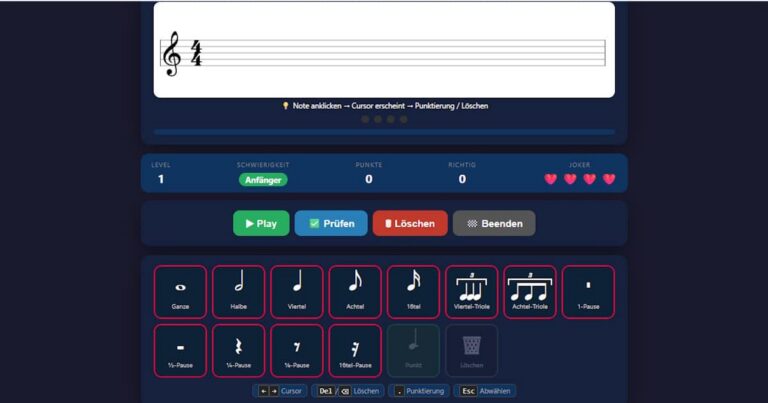
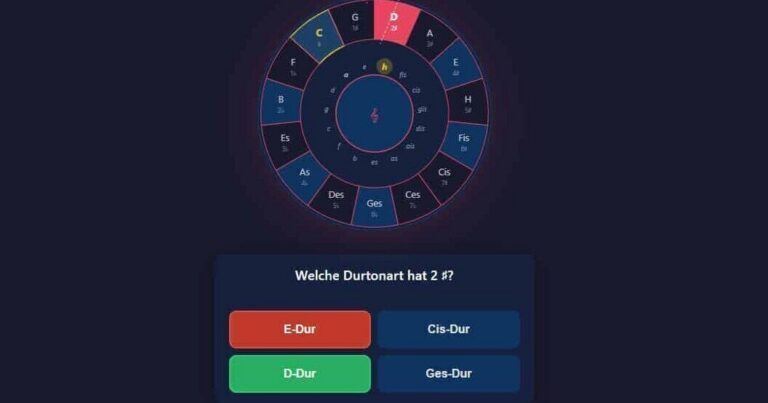
Interactive carousel with 5 music theory exercises. Use the arrow keys or swipe to move between the exercises.
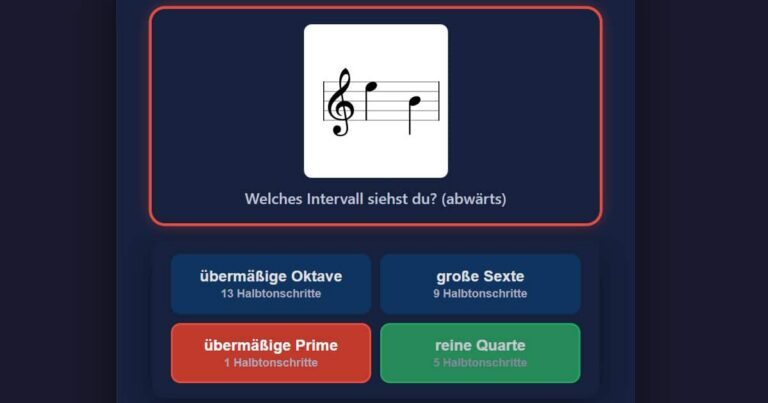
Interval Trainer
Practice identifying and notating intervals with confidence, from seconds to octaves.