A major or minor scale always consists of 8 notes with different intervals to the next note (Affiliate-Link)¹. The first and last notes are the same, just an octave higher. So it sounds the same, just higher or lower. Therefore, you can also say that a scale consists of 7 different notes.
In order to maintain these intervals (so-called half steps or whole steps), we sometimes need accidentals or key signatures: sharps or flats.
The circle of fifths helps us figure out how many accidentals a specific major or minor scale has. If you always keep it in mind, you will never have trouble with key signatures!
Interactive Circle of Fifths: Try out key signatures, chords, and scales
With the interactive circle of fifths, you can try it out for yourself right away: Tap a key in the circle and you’ll see how many sharps or flats it has, which chords belong to it, and what the scale looks like in musical notation and on the keyboard (Affiliate-Link)¹. You can listen to the scale and chord progression and switch between major and minor, as well as between beginner and pro views. There is also a dedicated page for each of the 30 keys, which you can find further down in the list.
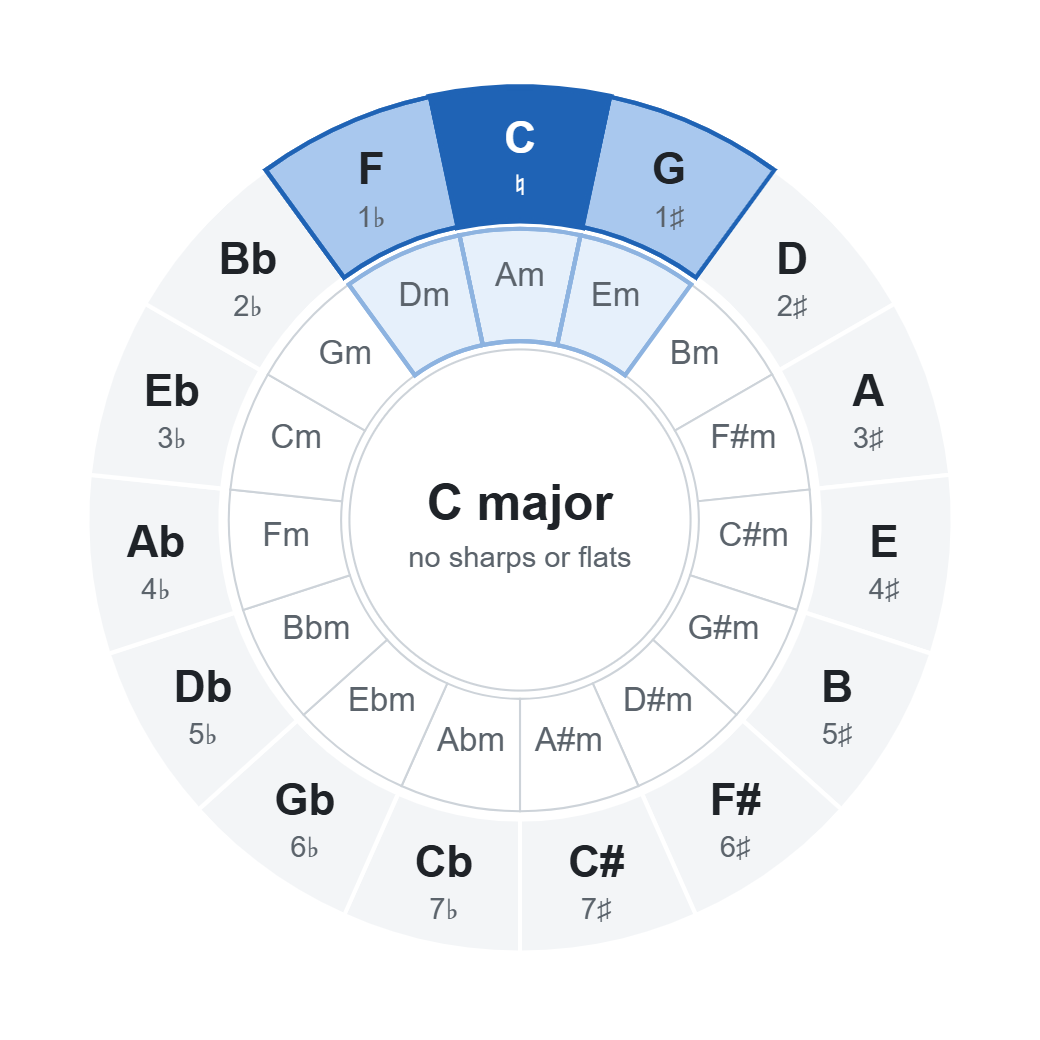
All keys at a glanceTable with key signatures and all diatonic chords for reference
Mnemonic for sharp keys: Good Dogs Always Eat Big Fat Cats
Mnemonic for flat keys: Fat Bears Eat Apples Daily Getting Chubby
| Key | Key signature | I | ii | iii | IV | V | vi | vii° |
|---|---|---|---|---|---|---|---|---|
| C majorA minor | none | C | Dm | Em | F | G | Am | Bdim |
| G majorE minor | 1 ♯F# | G | Am | Bm | C | D | Em | F#dim |
| D majorB minor | 2 ♯F#, C# | D | Em | F#m | G | A | Bm | C#dim |
| A majorF# minor | 3 ♯F#, C#, G# | A | Bm | C#m | D | E | F#m | G#dim |
| E majorC# minor | 4 ♯F#, C#, G#, D# | E | F#m | G#m | A | B | C#m | D#dim |
| B majorG# minor | 5 ♯F#, C#, G#, D#, A# | B | C#m | D#m | E | F# | G#m | A#dim |
| F# majorD# minor | 6 ♯F#, C#, G#, D#, A#, E# | F# | G#m | A#m | B | C# | D#m | E#dim |
| C# majorA# minor | 7 ♯F#, C#, G#, D#, A#, E#, B# | C# | D#m | E#m | F# | G# | A#m | B#dim |
| F majorD minor | 1 ♭Bb | F | Gm | Am | Bb | C | Dm | Edim |
| Bb majorG minor | 2 ♭Bb, Eb | Bb | Cm | Dm | Eb | F | Gm | Adim |
| Eb majorC minor | 3 ♭Bb, Eb, Ab | Eb | Fm | Gm | Ab | Bb | Cm | Ddim |
| Ab majorF minor | 4 ♭Bb, Eb, Ab, Db | Ab | Bbm | Cm | Db | Eb | Fm | Gdim |
| Db majorBb minor | 5 ♭Bb, Eb, Ab, Db, Gb | Db | Ebm | Fm | Gb | Ab | Bbm | Cdim |
| Gb majorEb minor | 6 ♭Bb, Eb, Ab, Db, Gb, Cb | Gb | Abm | Bbm | Cb | Db | Ebm | Fdim |
| Cb majorAb minor | 7 ♭Bb, Eb, Ab, Db, Gb, Cb, Fb | Cb | Dbm | Ebm | Fb | Gb | Abm | Bbdim |
Examples:
- The C major scale has no accidentals
- The E major scale has 4 sharps
- The D-flat major scale has 5 flats
- The E-flat minor scale has 6 flats
- The B minor scale has 2 sharps
The Circle of Fifths and the Fifth
Why is the circle of fifths actually called the circle of ‘fifths‘?
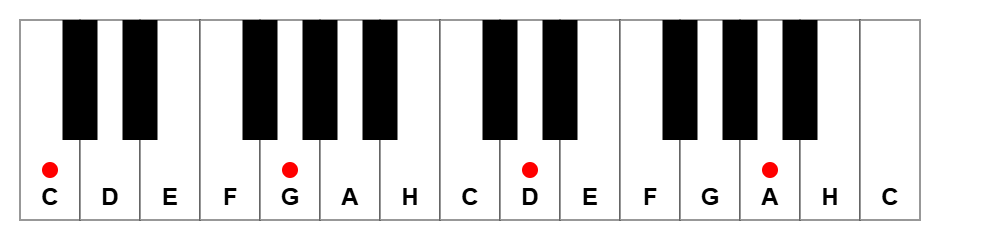
Let’s look at it next to a keyboard (Affiliate-Link)¹:
The circle starts with the C major scale: a fifth higher from C is G, the G major scale, and another fifth higher is the D major scale. The same applies to the scales with flats, only this time always a fifth lower. The same goes for the minor scales: they just start at A minor.
Relative Scales
Every major scale always has a relative minor scale that has the exact same key signature as the major scale: for C major, that’s A minor, G major – E minor, etc. Seen from major, these relative scales are always a minor third lower.
Or put differently: The relative minor scale is built on the 6th note (Affiliate-Link)¹ of the major scale, and the relative major scale on the 3rd note of the minor scale. In C major, the 6th note is an A, so the relative minor scale is the A minor scale. From this, the 3rd note is C, so the relative major scale to the A minor scale is the C major scale.
All of this can be read on the circle of fifths!
Mnemonics:
Sharp keys:
Good Dogs Always Eat Big Fat Cats
Flat keys:
Fat Bears Eat Apples Daily Getting Chubby
All keys explained individually
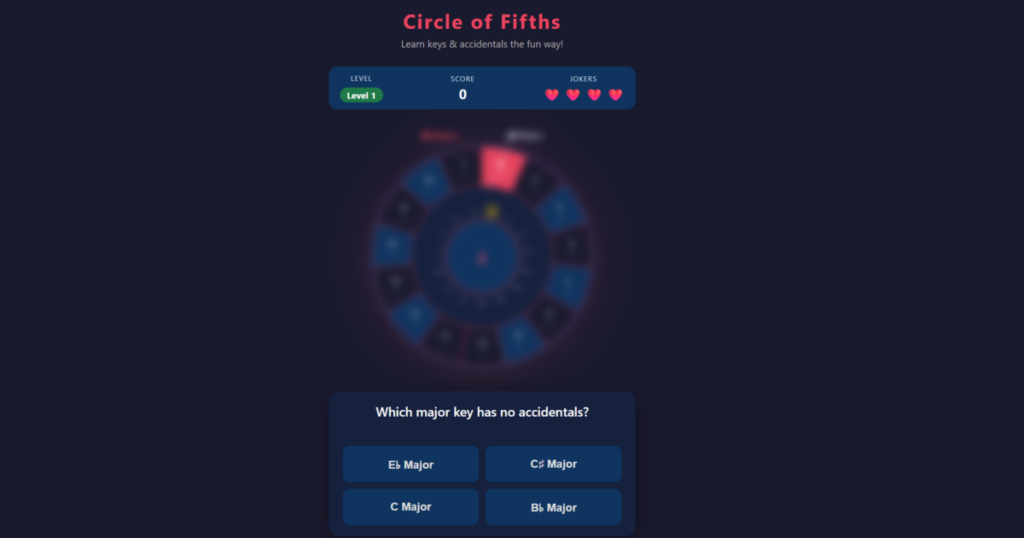
Free Online Exercises
Interactive carousel with 4 music theory exercises. Use the arrow keys or swipe to move between the exercises.
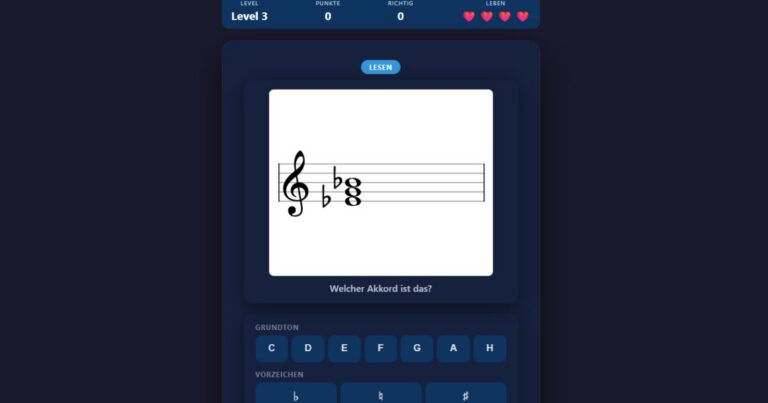
Reading Chords and Triads
Identify chords and triads in sheet music and strengthen your understanding of harmony.